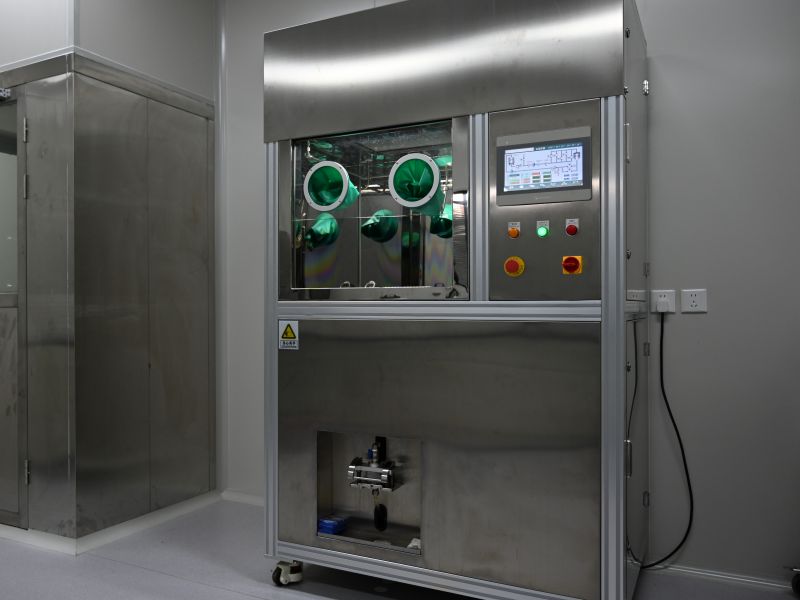
Against the backdrop of the automotive industry upgrading toward high-end and intelligent development, and liquid cooling systems achieving breakthroughs in high precision and high reliability, cleanliness control of precision components has become the core key to ensuring stable operation of complete machine systems and extending service life. Following the official implementation of the new VDA 19.1 (2026), which further lowers the cleanliness detection threshold to 5 micrometers, the global international standard system for automotive component cleanliness is undergoing an unprecedented historic overhaul, with industry supervision thresholds and technical requirements raised across the board.
In industries where precision, safety, and reliability determine product quality, contamination control has become more important than ever. Tiny particles, oil residues, metal debris, fibers, and dust can severely affect the performance of automotive components, hydraulic systems, aerospace assemblies, medical devices, and electronic products. Even microscopic contamination can lead to equipment failure, product recalls, reduced lifespan, or safety risks.
Integrating Liquid Cooling Cleanliness Equipment allows operators to detect, clean, and monitor these risks, ensuring the system operates reliably over time.
Cleanliness sample preparation equipment plays a crucial role in industries where contamination control directly affects product quality, safety, and performance. From automotive and aerospace to medical devices and electronics, accurate contamination analysis depends on precise and reliable sample preparation. This article explores how cleanliness sample preparation equipment works, its importance, types, applications, and how businesses can choose the right solutions to overcome real-world challenges.
In modern manufacturing environments—especially those involving precision electronics, data centers, automotive components, and semiconductor systems—liquid cooling has become a critical technology for thermal management. However, maintaining the cleanliness of these liquid cooling systems is just as important as their cooling performance. Contaminants such as particles, residues, oils, and microbial growth can severely compromise system efficiency, reduce lifespan, and increase operational costs.
In modern automotive manufacturing, cleanliness is no longer optional—it is a critical quality benchmark. Even microscopic contaminants can lead to component failure, reduced lifespan, or safety risks. This article explores how automotive parts cleanliness cleaning machines solve real-world manufacturing challenges, improve efficiency, and ensure consistent product quality. From working principles to selection criteria and maintenance strategies, this comprehensive guide is designed to help decision-makers choose the right solution and maximize return on investment.
We use cookies to offer you a better browsing experience, analyze site traffic and personalize content. By using this site, you agree to our use of cookies. Privacy Policy