The fundamental purpose of cleanliness control is to prevent product defects, safety hazards and equipment failures caused by contaminant accumulation. The first step is to comprehensively define controlled items and potential contamination risks, ensuring that all formulated standards are practical, targeted and free from ambiguous or unenforceable provisions.
Cleanliness control scopes are clearly defined and categorized into three major groups:
(1) end products, including precision components, implantable medical devices and finished materials;
(2) production carriers, such as manufacturing equipment, tooling and fixtures, molds and conveying devices;
(3) environmental media, including cleanroom air, work surfaces, floors, operator apparel and consumable materials.
All potential quality-impacting contaminants shall be fully investigated, and their corresponding hazard levels shall be clarified to provide a reliable basis for subsequent cleanliness grading and limit setting:
•Physical Contaminants: Dust, metallic particles, machining debris, hair, fibers and foreign particles. These contaminants may result in equipment jitter, component abrasion and cosmetic defects of finished products.
•Chemical Contaminants: Oil residues, cutting fluid residuals, detergent leftovers, material deposits and chemical agent residues. Such contaminants may cause material corrosion, undesired chemical reactions and functional performance degradation.
•Biological Contaminants: Bacteria, molds, microbes and ova, which are primarily controlled in food, pharmaceutical and medical device industries, as they may lead to hygiene violations and potential safety risks.
All cleanliness standards shall be benchmarked against mandatory industrial specifications and universally recognized criteria to ensure compliance and compatibility: ISO 14644 for cleanrooms, VDA 19.1 for automotive component cleanliness, ISO 19227 for medical device cleanliness, and GMP guidelines for pharmaceutical manufacturing. In addition, customized customer requirements and industrial best practices shall be incorporated into the standard formulation.
Ambiguous descriptive criteria such as “visually clean” shall be eliminated. All cleanliness indicators shall be established based on risk grading and quantitative indexing to ensure measurability and clear pass/fail judgment, while balancing safety requirements and production feasibility.
Differentiated cleanliness control levels are defined according to the degree of quality impact of controlled objects, preventing both excessive control and insufficient governance:
•High-risk Level: Critical components and clean zones that directly determine product core performance and operational safety (e.g., precision hydraulic components, surgical implant devices, aseptic production cleanrooms), subject to stringent cleanliness standards with zero tolerance for hazardous residual contaminants.
•Medium-risk Level: Auxiliary components and areas with indirect quality impact and secondary contamination risks (e.g., general production tooling, non-critical parts), with strictly controlled residual levels of conventional contaminants.
•Low-risk Level: Peripheral equipment and non-product-contact areas (e.g., external workshop walls, idle tooling), which only require routine cleaning and dust removal maintenance.
Quantifiable and testable threshold values shall be specified for all types of contaminants. The core quantitative dimensions below are adaptable to diverse industrial scenarios:
•Physical Particle Indicators: Define limits on maximum particle size, total particle count and total residual contamination weight. For automotive parts, for instance, the quantity of particles larger than 50μm and total residual impurity mass shall not exceed specified thresholds.
•Chemical Residue Indicators: Establish residual concentration limits, including the 10ppm general limit for pharmaceutical industries and toxicology-based PDE/ADE limits. Residual levels of detergents and solvents shall also be strictly controlled.
•Microbiological Sanitation Indicators: Specify maximum allowable counts of aerobic bacteria, molds and yeasts, with mandatory absence of pathogenic bacteria, applicable to aseptic and hygienic-grade production scenarios.
•Visual Acceptance Standard: All cleaned surfaces shall be free of visible oil stains, dust, foreign matter and water marks, serving as the fundamental acceptance baseline.
Threshold determination shall balance safety requirements and production feasibility. Parameters shall be optimized based on existing manufacturing processes, cleaning equipment accuracy, supplier quality capability and historical testing data, avoiding unachievably strict standards or excessively loose criteria that compromise quality assurance.
All cleaning activities shall be standardized in terms of methodologies, responsible personnel, frequency and consumables, translating abstract cleanliness requirements into executable operational procedures and eliminating arbitrary manual operations.
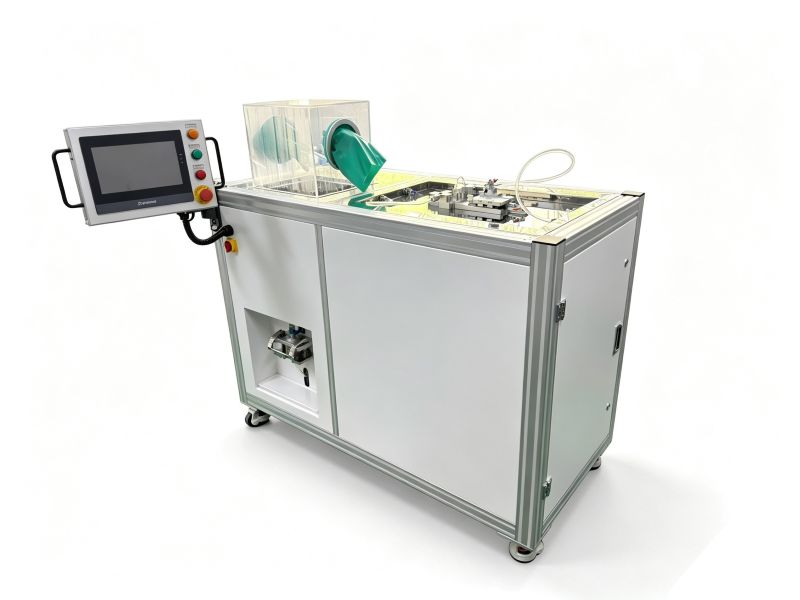
•Clean-in-Place (CIP): Applied to fixed production equipment. Enables automatic circulating cleaning and flushing without disassembly, ideal for continuous production lines.
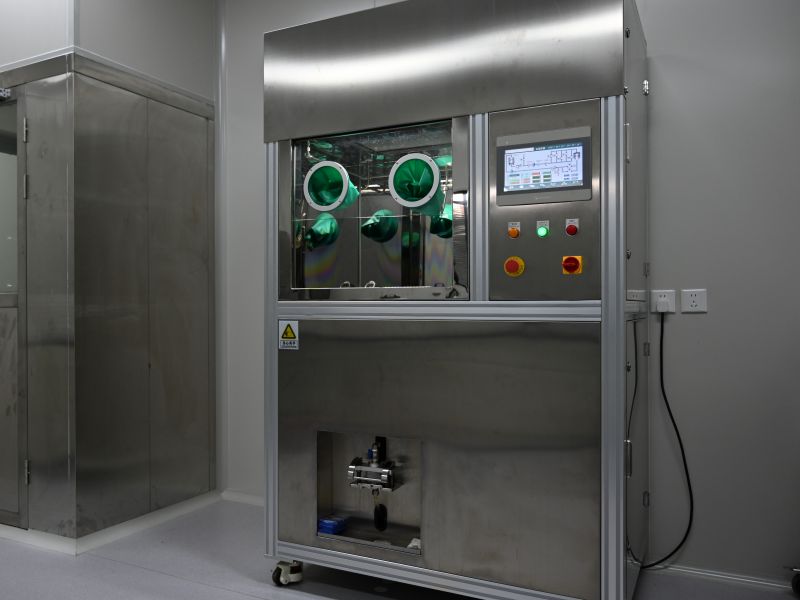
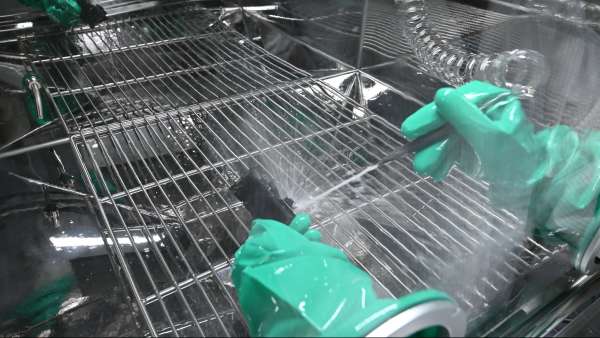
•Off-line Cleaning: Applied to detachable components and portable tooling. Items are disassembled and transferred to dedicated cleaning workshops for ultrasonic cleaning, spray rinsing, precision manual cleaning and other tailored treatments.
•Routine Environmental Cleaning: Regular cleaning and dust removal for workshop environments, external equipment surfaces and operating benches.
Formal written Standard Operating Procedures (SOPs) for cleaning shall be established, covering six core mandatory elements:
•Cleaning Frequency: Per-shift cleaning, daily routine cleaning, weekly deep cleaning, inter-batch cleaning, and post-shutdown & restart cleaning.
•Cleaning Tools: Dedicated lint-free cloths, dust-free wipes, professional cleaning equipment and filter elements. All tools are strictly classified and dedicated to prevent cross-contamination.
•Cleaning Media: Qualified detergents, purified water and solvents with defined concentration ratios and validated application scopes.
•Operational Procedures: Standardized full workflows including disassembly, pre-flushing, formal cleaning, precise rinsing, drying and controlled storage, with defined sequence and duration for each step.
•Responsibility Allocation: Clear definition of on-site operators and supervisory inspectors to achieve full accountability.
•Safety & Environmental Protection Requirements: Specifications for operator protective apparel, on-site environmental control, and compliant disposal of waste liquid and residues.
Scientific testing and batch validation shall be performed to verify the applicability and stability of established cleanliness standards, forming objective judgment criteria and eliminating subjective evaluation deviations.
•Sampling Rules: Define standardized sampling locations, sampling ratios and inspection frequencies, focusing on hard-to-clean and high-residue critical points.
•Testing Methods: Gravimetric analysis and microscopic particle counting for solid contaminants; HPLC and TOC testing for chemical residues; microbial culture and colony counting for biological contaminants.
•Judgment Criteria: Clear pass/fail and marginal-state judgment rules to clarify unambiguous acceptance boundaries.
Upon initial formulation or revision of cleanliness standards, three consecutive full-process validation batches shall be completed under worst-case conditions (most difficult-to-clean products, minimum cleaning parameters, maximum production load) to verify process stability and effectiveness, with complete validation reports retained for quality records.
A standardized non-conformity handling procedure shall be implemented: immediately isolate non-compliant products, perform re-cleaning and re-inspection, conduct root-cause analysis of contamination, optimize relevant cleaning procedures, and complete quality traceability to prevent non-conforming items from flowing into subsequent processes.
All cleanliness requirements, operational procedures and validation data shall be fully documented to form a closed-loop quality management system, with dynamic update mechanisms maintained for long-term regulatory and customer compliance.
A complete standardized document system shall be established, including cleanliness specification documents, cleaning SOPs, sampling & testing specifications, cleaning validation reports, non-conformity control procedures, equipment cleaning records and personnel training files, realizing full-process traceability.
Dedicated cleaning logs shall be maintained to record cleaning time, responsible operator, cleaning content and test results for each execution. Statistical analysis of contamination anomalies shall be conducted regularly to monitor residue variation trends and proactively prevent cumulative contamination risks.
•Routine Re-validation: At least one full-scale cleaning validation shall be conducted annually if no process changes occur.
•Change-driven Re-validation: Immediate re-validation and standard update shall be triggered by equipment modification, process adjustment, product iteration or detergent replacement.
•Standard Iteration: Cleanliness thresholds and operational procedures shall be continuously optimized in accordance with updated industrial standards, new customer requirements and accumulated production quality data.
All front-line operators, quality inspectors and managerial personnel shall complete specialized training on cleanliness standards, operational workflows, testing methodologies and non-conformity disposal protocols, and only qualified personnel are permitted to take posts. Regular on-site inspection and random audits shall be implemented to ensure effective execution and avoid formalized implementation.
The core methodology for establishing systematic cleanliness requirements consists of risk-based grading, quantitative indexing, process standardization, periodic validation and closed-loop quality control. By identifying contamination risks at the source and formulating enforceable, measurable and traceable cleaning specifications, enterprises can sustain long-term compliant cleanliness status for products, production equipment and manufacturing environments through continuous validation and systematic optimization.
Address:No. 225 Huajin Road, Tong'an Town, Huqiu District, Suzhou City, Jiangsu Province, China
Copyright © 2026 SuZhou Kolymo Precison Machinery Co.,Ltd. All Rights Reserved. Links| Sitemap| RSS| XML| Privacy Policy