News

Comparison of Advantages and Disadvantages of Ultrasonic Cleaning, Pressure Flushing and Circulating Flushing for Parts Extraction Cleaning

2026-07-01 0 Leave me a message

1. Core Working Principles of the Three Cleaning Methods

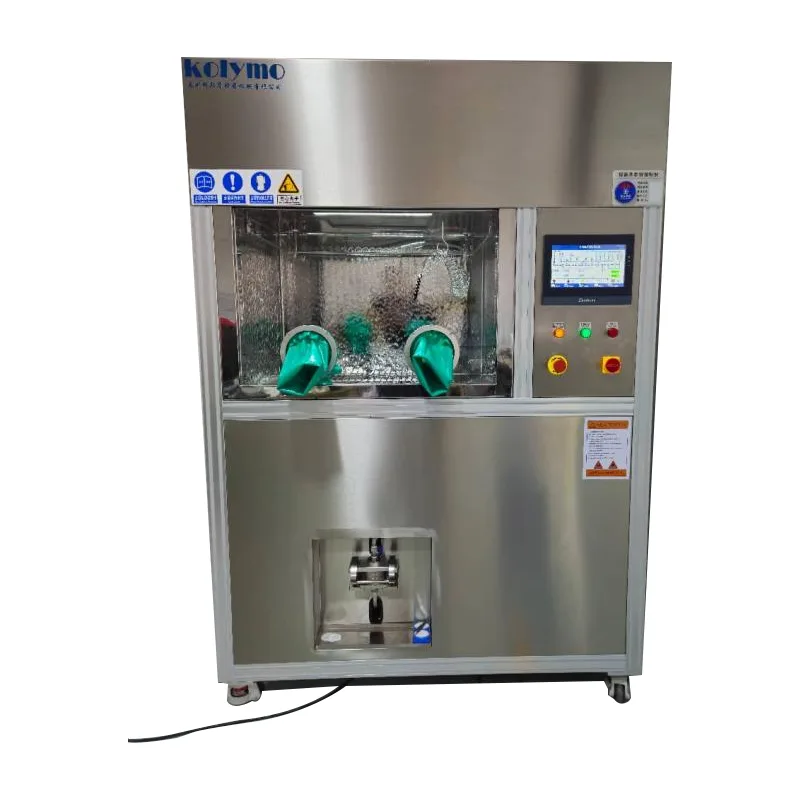
1. Ultrasonic Extraction Cleaning: The parts are completely immersed in a special extraction fluid. High-frequency vibration generated by ultrasonic transducers forms a large number of tiny cavitation bubbles in the cleaning fluid. The instantaneous rupture of bubbles produces a strong impact wave, which removes dust, metal debris, oil stains and other contaminants on the surface, micropores and gaps of parts, achieving full-angle dead-angle-free cleaning and extraction.

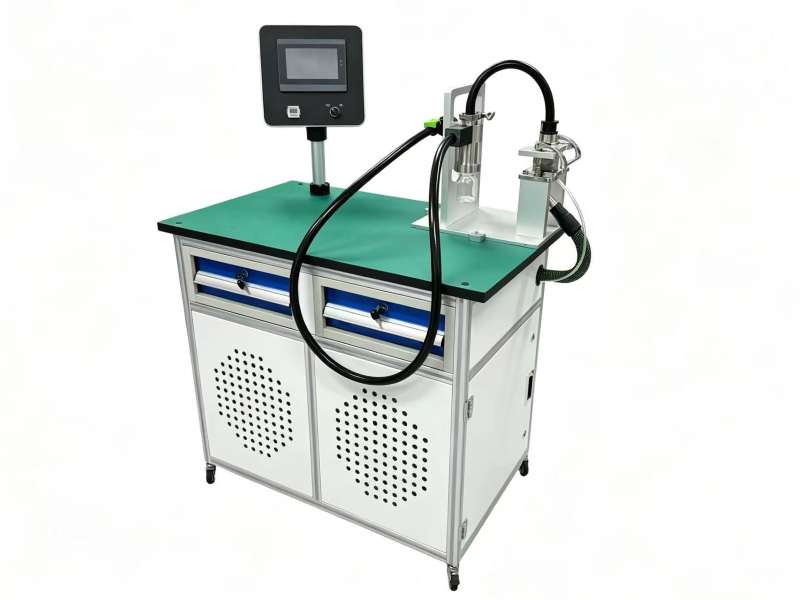
2. Pressure Flushing Extraction Cleaning: A high-pressure spray gun outputs high-pressure extraction fluid in a directional manner. The kinetic energy of high-speed fluid flow directly washes away attached contaminants on the outer surface, through holes and shallow grooves of parts. It is a targeted and active flushing extraction process that removes impurities by fluid impact force.

3. Circulating Flushing Extraction Cleaning: Parts are placed in a closed cleaning tank. A water pump drives the continuous circulating flow and turbulent scouring of the extraction fluid, which continuously takes away loose contaminants on the part surface while realizing the filtering and reuse of extraction fluid. It is an immersive dynamic flushing extraction process.


2. Detailed Comparison of Advantages, Disadvantages and Applicable Scenarios

2.1 Ultrasonic Cleaning

Core Advantages

•Dead-angle-free cleaning, suitable for complex structures: The cavitation effect can penetrate micropores, deep holes, blind holes, gaps and concave-convex structures of parts, thoroughly removing tiny particle contaminants in hidden positions. It delivers the best extraction effect for complex special-shaped parts among the three processes, fully meeting the micro-impurity detection requirements of precision parts.

•High extraction rate of micro-particles: It can effectively remove micron-scale dust, polishing residues and tiny metal debris, with excellent cleaning performance for light and thinly attached contaminants. It achieves comprehensive impurity extraction and high accuracy of detection data.

•Simple operation with minimal manual intervention: Batch parts can be cleaned by immersion without manual targeted operation. The batch sample preparation process is stable with extremely low human error.

•Ultra-low damage to part appearance: Relying on pure liquid-phase cavitation without mechanical friction or high-pressure impact, it avoids scratches and collisions on precision part surfaces, making it suitable for thin-walled, high-precision and easily deformable parts.

Core Disadvantages

•Poor removal capacity for heavy and stubborn contaminants: Simple ultrasonic vibration has low efficiency in removing cured oil stains, thick sludge and large adhered particles on part surfaces, failing to achieve thorough cleaning.

•Cleaning uniformity affected by part placement: Stacked or closely placed parts will block ultrasonic vibration and form cleaning blind areas, requiring small-batch single-time placement and limiting overall batch efficiency.

•Turbid extraction fluid requiring timely filtration: A large number of impurities suspend in the fluid after batch cleaning. Without timely filtration, tiny particles will re-adsorb on part surfaces and reduce detection accuracy.

•Certain operation and maintenance costs: The performance of transducers attenuates with long-term use and requires regular inspection and replacement, and the cleaning tank needs regular descaling maintenance.

Applicable Scenarios

Suitable for precision special-shaped parts, components with micropores/blind holes/gaps, thin-walled vulnerable parts, micro electronic accessories, precision transmission gears, hydraulic valve cores and other products, focusing on high-precision, micro-particle and complex-structure cleanliness extraction detection.

2.2 Pressure Flushing

Core Advantages

•Strong impact force and high decontamination efficiency: High-pressure fluid flow can quickly remove thick oil stains, large metal debris and cured dust on part surfaces, achieving far higher cleaning and extraction speed for heavily contaminated parts than ultrasonic and circulating flushing.

•Targeted and controllable precision cleaning: It can directionally flush key contaminated areas, through holes and shallow grooves of parts, with flexibly adjustable pressure, flow rate and spray angle to specifically remove stubborn impurities.

•No secondary pollution risk: Flushed impurities flow out with waste liquid directly without suspending in the cleaning fluid, avoiding secondary particle adsorption and ensuring high purity of extracted impurities.

•No full immersion required with controllable consumption: A large amount of extraction fluid for workpiece immersion is unnecessary, with on-demand spray consumption and low waste liquid discharge per sample.

Core Disadvantages

•Large blind areas for deep-position cleaning: High-pressure fluid has limited penetration capacity and cannot reach the interior of deep blind holes, tiny micropores and closed gaps, resulting in incomplete extraction of internal impurities in complex-structured parts.

•Risk of damaging precision parts: The strong high-pressure impact may cause deformation, surface scratches and edge collision damage to thin-walled parts, coated parts and micro precision components.

•High manual dependence and large error: Mostly operated by manual spray guns, the flushing angle, duration and pressure vary from person to person, leading to poor batch cleaning consistency and low detection repeatability.

•Incapable of batch operation: Only single parts can be flushed point by point at a time, resulting in extremely low batch sample preparation efficiency and inapplicability to mass detection.

Applicable Scenarios

Suitable for parts with simple structures, no dense micropores or blind holes and heavy surface contaminants such as shells, brackets, ordinary shafts and sheet metal parts, focusing on large-particle, heavy-pollution and simple-structure rapid extraction cleaning.

2.3 Circulating Flushing

Core Advantages

•Uniform cleaning and excellent batch consistency: The full-range circulating fluid in the closed tank ensures uniform cleaning of all part surfaces without manual operation errors, delivering stable batch cleaning effects and high repeatability of detection data.

•Applicable for batch operation with moderate efficiency: Multiple parts can be cleaned synchronously in a single batch, balancing single-sample accuracy and batch efficiency and adapting to regular mass cleanliness detection.

•Low material consumption and energy-saving & environmentally friendly: Extraction fluid can be reused through the filtering system with low waste liquid discharge, resulting in lower long-term material costs than single-spray pressure flushing.

•Good part protection performance: Low-speed turbulent scouring without high-pressure impact or severe vibration will not damage most metal and plastic parts.

•Simple operation and maintenance with low failure rate: The equipment consists of only water pumps, filtering systems and tanks, without vulnerable precision components such as transducers and high-pressure pumps, leading to extremely low later maintenance costs.

Core Disadvantages

•Weak decontamination capacity: Relying only on fluid turbulent scouring without cavitation effect or high-pressure impact, it has poor stripping performance for stubborn oil stains and tightly attached micro-particles.

•Limited cleaning effect on complex structures: Poor fluid fluidity in deep holes and gaps leads to insufficient scouring force, making it difficult to completely extract impurities in hidden positions.

•Potential secondary pollution risk: Impurities suspend in the circulating fluid during cleaning. Insufficient filtering accuracy or untimely filter replacement will cause fine particles to re-adhere to part surfaces and affect extraction accuracy.

Applicable Scenarios

Suitable for conventional-structured, lightly contaminated parts requiring standardized mass detection such as standard fasteners, ordinary bearings and precision stamping parts, focusing on light-pollution, standardized and mass-scale conventional extraction cleaning.


3. Comprehensive Comparison Table of the Three Cleaning Methods


4. Process Selection Recommendations

1. For precision special-shaped parts with micropores/blind holes and high cleanliness requirements (hydraulic, aerospace and new energy precision components), ultrasonic cleaning is preferred to ensure extraction and detection accuracy.

2. For industrial parts with simple structures, thick surface oil stains and large particle impurities, pressure flushing is preferred for optimal decontamination efficiency.

3. For conventional standard parts with slight pollution and regular mass detection requirements, circulating flushing is preferred to balance efficiency, cost and detection stability.

4. Combined processes are recommended for high-stringency detection scenarios: adopt pressure flushing to remove surface heavy pollution first, then ultrasonic cleaning to extract internal micro-particles, and finally circulating filtration purification to maximize the accuracy of cleanliness detection.


Related News
Leave me a message
X
We use cookies to offer you a better browsing experience, analyze site traffic and personalize content. By using this site, you agree to our use of cookies.Privacy Policy
RejectAccept